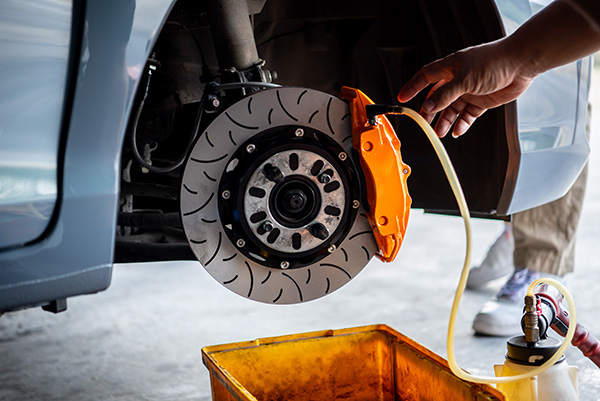
A brake flush can sound unnecessary when the car stops normally. The pedal feels firm enough, there is no grinding noise, and the brake warning light is off. From the driver’s seat, everything seems fine.
That is exactly why brake fluid gets ignored. It does its work inside the hydraulic system, where you cannot see it aging. The brakes can feel normal during everyday stops while the fluid slowly absorbs moisture, loses heat resistance, and allows corrosion to begin in parts that are much more expensive than a fluid service.
The Brake Pedal Can Be Misleading
A firm brake pedal does not always mean the brake fluid is healthy. It only means the system is still building pressure while you're driving the way you are right now. That may be light traffic, short trips, or gentle braking around town.
Brake fluid problems often show up when the system gets hotter. A long downhill drive, repeated stops, freeway traffic, or a sudden hard stop can expose weak fluid that felt fine five minutes earlier. That is why waiting for the pedal to feel bad is not the best way to decide when fluid service is due.
Brake maintenance should be based on condition, age, and service history, not only on whether the car stopped fine this morning.
Brake Fluid Absorbs Moisture Over Time
Brake fluid is hygroscopic, which means it absorbs moisture. The brake system is sealed, but it is not perfectly isolated from humidity, temperature changes, exposure to rubber hoses, and normal service work. Little by little, moisture gets into the fluid.
That moisture lowers the fluid’s boiling point. Fresh brake fluid can handle much more heat than old fluid with water in it. When the fluid gets too hot, it can boil, creating vapor inside the brake lines. Vapor compresses, and that is when the pedal can feel soft, long, or spongy.
Moisture also encourages corrosion inside the brake system. That part matters because the most expensive damage is often happening where you cannot see it.
Old Fluid Can Hurt Expensive Brake Parts
Brake fluid moves through lines, hoses, calipers, wheel cylinders, the master cylinder, and ABS hydraulic components. Those parts rely on clean fluid to protect seals and internal passages. When fluid gets old and contaminated, it can become rough on the system from the inside.
Corrosion or debris in the hydraulic system can cause sticking calipers, damaged seals, brake line problems, or ABS-related issues. Those repairs are usually far more expensive than flushing the fluid before it reaches that point.
A brake flush is not meant to fix worn brake pads. It is meant to protect the hydraulic side of the brake system so the pressure you depend on stays reliable.
A Brake Flush Is Not The Same As Adding Fluid
Topping off the reservoir only adds a small amount of new fluid to old fluid. It does not remove moisture-heavy fluid from the calipers, lines, hoses, or ABS components. If the fluid in the system is old, adding a little fresh fluid at the top does not refresh the whole system.
A brake flush removes old fluid and replaces it with the correct new fluid. The system also has to be bled properly so air does not remain trapped in the lines. On some vehicles, the ABS system may require a specific procedure to move fluid through the hydraulic unit.
Low brake fluid should also be checked carefully. It can happen as brake pads wear, but a sudden drop can mean a leak. Filling the reservoir without identifying the cause can mask a serious problem.
When A Brake Flush Makes Sense
Brake fluid service should be based on the vehicle and the condition of the fluid. A few situations make the recommendation more reasonable.
- The brake fluid is several years old, even if the pedal still feels normal. Time matters because moisture enters slowly, and most drivers won't notice the difference until the brakes are hot.
- The fluid looks dark, dirty, or contaminated. Color is not the only test, but fluid that looks rough usually deserves closer attention.
- The vehicle has unknown service history. If no one knows when the fluid was last changed, the safest plan is to inspect it rather than assume it is still good.
- Brake hydraulic parts were replaced. Calipers, hoses, wheel cylinders, master cylinders, and brake lines can require proper bleeding and fresh fluid after service.
- The pedal feels soft after repeated stops. That can point toward heat, moisture, air in the system, or another hydraulic issue that needs attention.
These are practical reasons, not scare tactics. Good brake service should include an explanation of why the flush is recommended.
Brake Fluid Should Be Checked With The Whole Brake System
A brake flush is one piece of brake care. The pads, rotors, calipers, hoses, hardware, brake lines, fluid level, leaks, and pedal feel should all be looked at during an inspection. If the pads are thin or a caliper is sticking, fresh fluid alone will not solve that problem.
The opposite is true too. New pads do not replace old brake fluid. Pads and rotors handle friction. Brake fluid handles pressure. Both sides of the system need attention if you want the brakes to feel right and respond consistently.
Regular maintenance helps catch the small things before they stack up. Brake fluid service is part of that bigger picture.
Get Brake Flush Service With The Car Guys
If your brake fluid is old, dark, overdue, or you are not sure when it was last serviced, The Car Guys can inspect the brake system and explain whether a brake flush is needed.
For brake flush service in Summerlin, NV, Las Vegas, NV, and Wilmington, NC, follow us on Facebook for updates, and contact us to schedule an appointment.