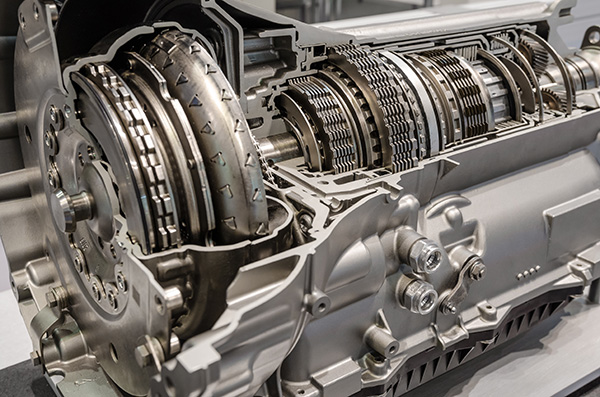
An automatic transmission shifts for you, so it's easy to stop thinking about what's going on underneath. Then a shift feels different, somebody recommends a flush, and suddenly you're hearing three conflicting opinions. Which advice actually applies to your car?
A lot of the confusion comes from treating every automatic like the same system. The design, the fluid requirements, and the reason behind a symptom all shape the right next step. These five common misunderstandings can make maintenance and repair decisions harder than they need to be.
1. Automatic Transmission Designs Are Not All The Same
A conventional automatic often uses a torque converter and internal gearsets. A dual-clutch transmission arranges its clutches differently, and many continuously variable transmissions change ratios without conventional stepped shifts. Hybrid transmissions can differ again. "Automatic" describes how you drive the car, not one universal construction.
Those differences affect normal sounds, low-speed behavior, service procedures, and fluid choice. So advice from a friend with a different transmission may not apply to yours. Before you talk about a service or a symptom, find out exactly which unit is in the vehicle. Even a single model name can cover several transmission designs across its engine choices and model years.
2. Lifetime Transmission Fluid Still Needs A Careful Service Review
Some vehicles call their transmission fluid a lifetime fill, but you should read that wording alongside the service information and how the car is used. Heat, load, and use all affect fluid condition. Transmission makers and vehicle manufacturers may even publish different guidance for particular units or demanding service.
The smart move is to check your vehicle's instructions instead of assuming every transmission needs the same interval, or that none does. Consider mileage, age, towing, and any available history. A vehicle with unknown past use may need a closer evaluation. Keep records of the fluid specification and the work that was actually done, not just a receipt that says transmission service.
3. An Unusual Transmission Shift Doesn't Automatically Mean A Rebuild
A harsh shift, delayed engagement, or surprise downshift can involve fluid level, electronic controls, sensors, engine performance, or internal wear. The transmission relies on information from other systems, so a fault outside the gearbox can change how it behaves. The symptom alone doesn't tell you the repair.
Checking stored information, reproducing the concern, and inspecting the fluid level under the specified conditions helps narrow things down. A low level needs an explanation, because fluid doesn't normally vanish from a sealed system for no reason. Some concerns need an external repair, while others involve internal damage. The recommendation should follow those findings, not jump to the most expensive possibility.
4. Transmission Fluid Service Can't Reverse Existing Wear
A properly selected service can renew fluid, but it can't replace worn clutch material or repair a damaged bearing. That distinction gets lost when a car starts slipping around the time a fluid change is on the table. A failing transmission needs evaluation before routine service gets presented as the cure.
The service method should fit the unit's condition and the manufacturer's procedures. A drain-and-fill, a filter replacement, and a fluid exchange are three different operations, so ask which one is being proposed and why. Claiming that fresh fluid always destroys an older transmission is too broad. So is promising that a flush will fix every poor shift. Let your current symptoms guide the inspection.
5. Automatic Transmission Fluids And Additives Are Not Interchangeable
Transmission fluid handles lubrication, cooling, hydraulic control, and the friction behavior of internal parts, so the correct specification matters. A bottle that looks similar or has a familiar color doesn't prove the fluid suits your transmission.
Extra additives can change the fluid's intended properties, and some transmission makers prohibit them. Use the specified fluid and follow the filling procedure, which may call for a particular temperature and equipment. Overfilling is as bad as underfilling. And if your transmission has no dipstick, it still has a level-check method. It just may not be a driveway job.
Transmission Symptoms Are Easier To Check With Clear Details
Instead of trying to name the failed part, think about what the car actually does. Does the engine speed climb without a matching rise in road speed? Is the shift delayed only when cold? Is there a clunk when you select Drive after a warm restart?
Helpful details for a transmission appointment include:
- The gear selection and speed when the concern happens.
- Whether the vehicle is cold, warm, towing, or climbing.
- Warning messages and any recent fluid or repair work.
Please don't repeatedly provoke slipping or overheating to demonstrate it. A careful description lets us choose a controlled check instead.
Automatic Transmission Care Starts With Suitable Driving Habits
Stop completely before switching between forward and reverse, unless the manufacturer says otherwise. Follow the towing limits and the correct gear or mode instructions for your vehicle. If a transmission temperature warning appears, follow the manual's instructions instead of continuing under the same load.
Good habits work alongside maintenance and prompt checks of new symptoms. A smooth transmission today is a reason to keep caring for it, not proof the fluid and components will stay unchanged forever. Make its requirements part of your vehicle's full maintenance plan.
Get Automatic Transmission Service With The Car Guys In Nevada And North Carolina
The Car Guys serves drivers in Summerlin and Las Vegas, NV, and at two locations in Wilmington, NC. We can inspect shifting concerns, review the service history, and explain the maintenance or repair your automatic transmission needs.
Contact us to schedule an inspection of your vehicle's automatic transmission concerns.