A/C refrigerant leaks usually start small. The system still cools the cabin, just not as quickly, and you may only notice it on the hottest days or when you are stuck in traffic. That is why so many drivers put it off until the air is barely cool or suddenly turns warm.
Refrigerants do not get used up like fuel. If the level is low, it leaked out somewhere.
Catching the signs early can save you time, money, and a lot of sweaty drives.
Sign 1: The A/C Takes Longer To Get Cold
One of the first changes drivers notice is that the A/C still gets cool, but it takes more time than it used to. You start the car, turn on the air, and it feels like it is thinking about it before the temperature drops.
That delay often happens when the refrigerant charge is a little low. The system can still run, but it is operating at reduced capacity, so it cannot remove heat from the cabin as quickly.
If this change has been consistent for a week or two, it is worth scheduling an inspection instead of assuming it will fix itself.
Sign 2: Cold While Driving, Warmer At Stoplights
This is a classic early leak symptom. On the road, airflow across the condenser is strong, so the system gets help shedding heat. At a stop, airflow drops, underhood temperatures rise, and the A/C has to work harder to keep up.
When the refrigerant level is slightly low, that reduced margin shows up at idle first. The vents feel cool while you are moving, then noticeably warmer when you are sitting in traffic.
This symptom can also happen with a weak cooling fan or a condenser that is packed with debris, which is why an inspection should look at the whole system, not just the refrigerant level.
Sign 3: The Compressor Cycles On And Off More Often
A healthy A/C system cycles in a fairly steady rhythm. When the refrigerant is low, pressures can fluctuate, and the compressor may click on and off more frequently. Some drivers notice the cooling comes in waves, cold for a moment, then less cold, then cold again.
You might also hear more frequent clicks from the engine bay as the compressor clutch engages and disengages. That does not always mean the compressor is failing, but it is a sign the system is not operating in its normal range.
If cycling is happening more than usual, it is smart to have it checked before the system gets too low and starts stressing the compressor.
Sign 4: You Notice A Musty Smell Or Foggy Windows With A/C Use
This one surprises people because it is not always a refrigerant problem by itself. A musty smell can come from moisture and buildup on the evaporator, and foggy windows can happen when the A/C is not dehumidifying well.
When the refrigerant is low, the system may not remove moisture from the cabin as effectively. That can make the interior feel damp and can contribute to window fogging, especially during humid weather or rainy days.
If you are noticing musty odors plus weaker cooling, it is a good reason to schedule an inspection so the system can be evaluated as a whole.
Where A/C Refrigerant Leaks Usually Start
Leaks can show up at several points, especially as vehicles age. Rubber O-rings harden. Hoses flex with vibration. Condensers take hits from road debris. Service ports can seep if the valve core is weak or the cap is missing.
Here are common leak locations we see:
- Service port valve cores and missing caps
- O-rings at hose and line connections
- Rubber hoses that seep with age
- Condenser damage from rocks and road debris
- Compressor shaft seal seepage
A leak can be so small that you never see oil or wetness under the hood. That is why performance clues matter.
Adding Refrigerant Without Fixing The Leak
It is tempting to top it off and move on. The issue is that refrigerant does not vanish on its own. If you add refrigerant and the system is low again later, the leak is still there and may be growing.
There is also a practical concern. Refrigerant carries oil through the system. If the charge gets too low, lubrication can be affected, and that can shorten compressor life. A recharge can be part of the solution, but only when the leak source is addressed and the system is charged to the correct specification.
How the Leaks Are Confirmed And Located
The first step is checking vent temperature and system pressures to confirm performance. If pressures suggest low charge, the next step is locating the leak.
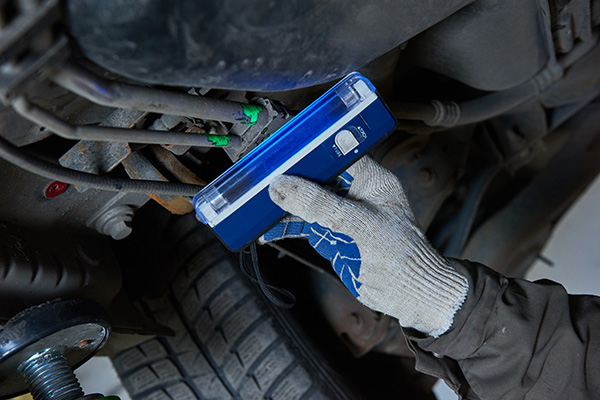
Leak checks can include dye testing, electronic leak detection, and visual inspection for oily residue at fittings and components. The point is not guessing. It is identifying exactly where the refrigerant is escaping, so repairs actually last.
Once the leak is repaired, the system should be evacuated and recharged correctly. Modern systems are sensitive to the precise amount of refrigerant.
Get A/C Leak Repair In Summerlin, NV, Las Vegas, NV, And Wilmington, NC With The Car Guys
If your A/C is taking longer to cool, getting warm at idle, cycling oddly, or feeling inconsistent, we can inspect the system, locate the refrigerant leak, and explain the most practical repair plan based on what we find.
Schedule your A/C inspection with The Car Guys in Summerlin, NV, Las Vegas, NV, or Wilmington, NC, and let us get your cabin cooling back to full strength.